We see it far too often in Hamilton. A contractor relies solely on SPT data for a commercial build in the lower city, only to hit a pocket of soft clay or an undocumented karst feature near the escarpment that the split spoon missed entirely. The result is a costly redesign and a six-week delay. Hamilton's soil is not uniform. The city sits on a complex mix of glacial Lake Iroquois sediments, silty clays, and the fractured limestone of the Niagara Escarpment. A standard penetration test gives you a number every 1.5 meters. A CPT test, run to ASTM D5778, delivers a near-continuous profile of tip resistance, sleeve friction, and pore pressure, revealing exactly where the weak seams are. When you pair a CPT with a detailed grain size analysis from our lab, you get a complete picture that SPT alone simply cannot provide.
A single CPT sounding replaces multiple SPT boreholes for stratigraphic profiling, reducing your site investigation time by half while improving data density.
Methodology applied in Hamilton
Typical technical challenges in Hamilton
A practical observation from our work across Hamilton: many foundation issues we investigate stem from an overestimation of the bearing capacity in the upper 3 meters. The weathered crust of the Halton Till can feel firm under a trackhoe, but the CPT often reveals a 2-meter layer of desiccated, overconsolidated clay sitting above normally consolidated, softer material. If your geotechnical report doesn't catch this, you'll see differential settlement within the first year. The problem is worse near the escarpment face, where groundwater seepage creates localized zones of high pore pressure. We have seen projects where ignoring pore pressure dissipation tests led to a miscalculation of effective stress, triggering a slope movement that required emergency slope stability remediation.
Our services
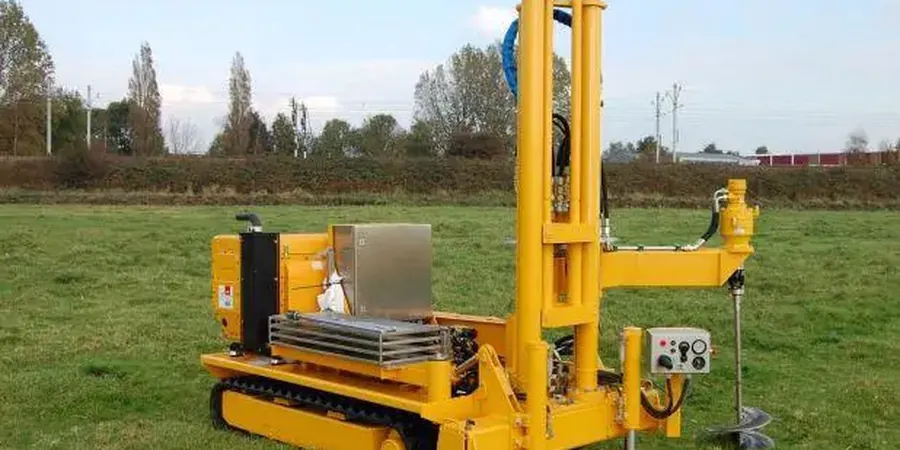
Our CPT testing in Hamilton integrates directly with your design workflow, providing data that structural and geotechnical engineers can use immediately. Each program is tailored to the specific geological unit you are building on.
Standard CPTu Soundings
Continuous profiling with pore pressure measurement for accurate soil behavior type (SBT) classification in Lake Iroquois clays and silts.
Seismic CPT (SCPTu)
Downhole shear wave velocity (Vs) measurement for seismic site class determination per NBCC 2020 in Hamilton's east-end industrial zones.
Pore Pressure Dissipation Tests
In-situ measurement of consolidation characteristics (ch) in the compressible clays common to the Red Hill and lower city areas.
Deep Bedrock Confirmation
High-capacity pushing to refusal for confirming bedrock depth in areas with suspected pinnacled rock or karst features near the escarpment.
Frequently asked questions
How much does a CPT test cost in Hamilton?
For Hamilton projects, our standard CPTu soundings typically run between CA$240 and CA$310 per meter, depending on depth, access constraints, and whether seismic or dissipation modules are required.
Can CPT replace all my boreholes for a Hamilton building permit?
In Hamilton, a CPT can significantly reduce the number of boreholes needed, but the Ontario Building Code and the City's geotechnical review often require at least one borehole for physical sampling, especially to confirm the top of bedrock near the escarpment.
What depth can you reach with CPT in the Halton Till?
We typically push to 15–25 meters in the Halton Till before reaching refusal on the dense basal layer or Queenston Shale bedrock. The specific refusal depth depends on the overconsolidation ratio of the till at your site.
How do you interpret the pore pressure data for Hamilton's clays?
We look at the normalized pore pressure ratio (Bq). In the normally consolidated silty clays of the lower city, a positive Bq is expected. A negative or zero Bq in these clays often indicates a desiccated crust or a sand seam, which is critical for settlement calculations.