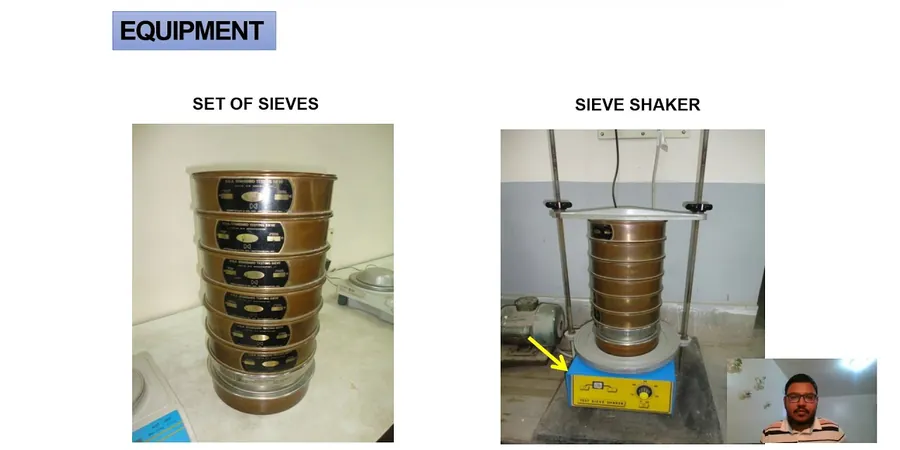
A stack of brass sieves, a mechanical shaker, and a calibrated hydrometer cylinder sit on the bench in our Hamilton soil lab. That equipment is the backbone of every grain size analysis we run for projects across the Golden Horseshoe. From the glacial till of the Niagara Escarpment to the silty deposits near the harbour, the particle distribution tells a story. It dictates drainage, frost susceptibility, and compaction behavior. We perform the full curve: coarse fraction through sieves, fine fraction with the hydrometer. No shortcuts. The lab in Hamilton processes samples within 48 hours because we know your excavation crew won't wait a week. Combined with field logs from test pits, the gradation report gives you a complete picture of the formation.
A single gradation curve determines whether your fill drains or heaves. We deliver that curve with ASTM D422 precision in two working days.
Methodology applied in Hamilton
Typical technical challenges in Hamilton
The Ontario Building Code references ASTM D422 for soil classification, and NBCC 2015 requires a geotechnical investigation for all Part 9 structures. In Hamilton, the risk of misclassifying a soil hits hard on two fronts: frost action and liquefaction potential. A gap-graded gravelly sand with silt behaves entirely differently from a uniform fine sand under dynamic loading. The grain size analysis is the first screen for liquefaction susceptibility, per the Seed-Idriss framework. If your gradation shows a soil that falls within the envelope of potentially liquefiable soils, further testing is triggered. Ignoring this step has led to differential settlement in Hamilton's lower city, where lacustrine silts and clays dominate. The hydrometer curve provides the fines content that directly feeds into the liquefaction assessment. A few percentage points of silt can shift the soil from susceptible to non-susceptible.
Our services
Our Hamilton soil lab provides the full grain size distribution from coarse gravel to clay colloids. Each report includes the gradation curve, USCS classification, and a plain-language summary for your site team.
Sieve Analysis (Coarse + Fine)
Mechanical sieving from 75 mm down to the #200 sieve. We wash the sample through the #200 sieve to separate the fines fraction. The retained material is oven-dried and shaken through a stack of sieves. Results are reported as percent passing by weight. Ideal for granular materials, concrete aggregates, and engineered fill quality control.
Hydrometer Analysis (Sedimentation)
For the fraction passing the #200 sieve, we run a hydrometer test using a 152H hydrometer and sodium hexametaphosphate dispersant. Readings are taken at timed intervals over 24 hours. The sedimentation curve gives you the silt-clay split and effective grain size (D10), which feeds directly into permeability estimates and frost heave potential assessments.
Frequently asked questions
What does a grain size analysis cost in Hamilton?
A standard sieve plus hydrometer analysis runs between CA$120 and CA$230 per sample, depending on whether we need both the coarse sieve stack and the full hydrometer sedimentation. Expedited same-day reporting adds a surcharge. This includes the gradation curve, Cu and Cc coefficients, and USCS classification.
How much sample material do you need for the test?
For a combined sieve and hydrometer analysis, we need about 500 grams of material passing the #4 sieve. If the soil contains gravel or cobbles, send a larger bag, roughly 2 to 5 kilograms. The lab will split and prepare the specimen per ASTM D422. Keep the sample in a sealed bag to preserve natural moisture if you also need water content.
How fast can I get the results?
Standard turnaround is 48 hours from the time the sample arrives at the Hamilton lab. The hydrometer test requires a 24-hour sedimentation period, which sets the minimum timeline. We can often deliver the sieve portion within the same day and the full combined report the following morning.
Why do I need the hydrometer if I already have the sieve results?
The hydrometer measures the silt and clay fraction below the #200 sieve. That fine content controls frost heave, drainage, and cohesion. A sieve analysis alone tells you nothing about the plasticity or the true fines distribution. In Hamilton's silty lacustrine soils, skipping the hydrometer can lead to underestimating settlement time and overestimating bearing capacity.