In Hamilton, we often see projects that look straightforward on paper until you hit the ground. The city sits at the western tip of Lake Ontario, and the soil profile here tells a complicated story. You can find stiff Halton Till overlying the Queenston Shale on the Mountain, while the lower city near the harbour has deep layers of glaciolacustrine silt and clay. The Niagara Escarpment cuts right through the city, creating one of the most dramatic elevation changes in Ontario. A proper soil mechanics study here is not just about bearing capacity—it is about understanding how water moves through these layered deposits. In our experience, the difference between a smooth build and a costly delay often comes down to lab testing that captures the real behavior of these local soils. We have seen too many cases where generic assumptions from regional tables missed the high sensitivity of the lower city clays, leading to unexpected settlement. That is why we push for a site-specific grain-size analysis combined with Atterberg limits when working in the Dundas Valley or near the Red Hill Creek floodplain, where silty layers can create tricky drainage conditions.
In Hamilton, the escarpment doesn't just provide a view—it creates a hydrogeological boundary that changes soil strength across a single lot.
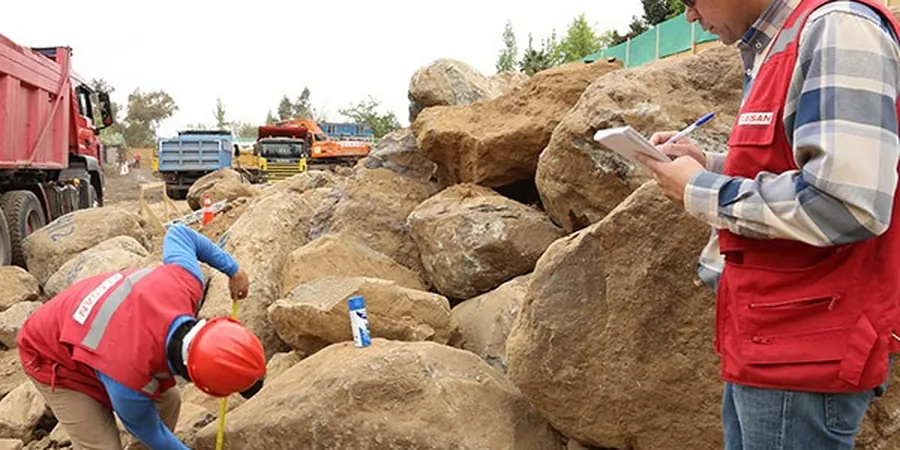
Methodology applied in Hamilton
Typical technical challenges in Hamilton
The triaxial cell is our primary tool when Hamilton's geology gets complicated. It is a system that allows us to apply confining pressure to a soil specimen while measuring pore pressure response during shear. The reason we rely on it here goes back to the escarpment. The hydraulic boundary created by the shale layers means that perched groundwater tables are common, and effective stress conditions can change drastically after heavy spring melt or a major storm event. If you skip a soil mechanics study that captures this, you risk installing footings that perform well in dry August but undergo differential settlement by November. We have also seen retaining walls near the Mountain brow fail because the backfill drainage was designed using permeability values from remolded samples instead of undisturbed block specimens. Our lab follows ASTM D4767 for consolidated-undrained triaxial tests, ensuring the strain rate is slow enough to allow pore pressure equalization in the low-permeability silts that dominate the Hamilton Harbour watershed.
Our services
A soil mechanics study in Hamilton typically requires a combination of field investigation and laboratory testing tailored to the site's location—whether it is on the Halton Till plain, the escarpment face, or the lakefill of the industrial waterfront. The scope depends on the complexity of the ground profile.
Advanced Triaxial and Consolidation Testing
We run CU and CD triaxial tests on undisturbed Shelby tube samples from the lower city clays and Dundas Valley silts. The consolidation data provides the compression index and preconsolidation pressure, which are essential for calculating settlement magnitude and rate in Hamilton's sensitive glaciolacustrine deposits.
Grain Size Distribution and Soil Classification
Using mechanical sieves and hydrometer analysis per ASTM D6913 and D7928, we quantify the silt content that controls frost susceptibility and drainage behavior. This is particularly important for sites near the escarpment, where a thin silt seam can act as a slip plane in slope stability assessments.
Frequently asked questions
How much does a soil mechanics study cost for a residential lot in Hamilton?
For a standard single-family lot on the Mountain or in Ancaster, a soil mechanics study with a test pit, sampling, and basic lab testing usually falls between CA$4,910 and CA$6,770. The final cost depends on the number of samples, access conditions, and whether triaxial or consolidation testing is required.
Why is the Niagara Escarpment a concern for soil testing?
The escarpment creates complex groundwater flow paths and variable bedrock depths over very short distances. Soil mechanics testing here must account for seepage forces and the potential for shale bedrock weathering, which can reduce the strength of the overlying till at the contact zone.
Do you need to test for liquefaction in Hamilton?
Liquefaction is generally not a primary design concern on the dense Halton Till of the Mountain. However, for projects near the waterfront on loose hydraulic fill or in the lower city where saturated fine sands exist, a site-specific liquefaction assessment using SPT-based methods like NCEER may be recommended.
How long does the laboratory testing phase usually take?
Basic classification tests such as grain size and Atterberg limits typically take 5 to 7 business days. If the project requires triaxial shear or consolidation tests for settlement analysis, the turnaround is usually 2 to 4 weeks, depending on the soil type and the required strain rates for testing.