Hamilton's layered history, from its 1816 founding as a modest agricultural settlement to its industrial peak as Canada's steel capital, has left a complex footprint beneath the city. The rapid expansion of the port, railways, and the Queen Elizabeth Way through the mid-20th century demanded road infrastructure built on everything from deep lacustrine clay deposits to shale bedrock of the Niagara Escarpment. Today, with over 560,000 residents and ambitious renewal projects along the West Harbour and in the Barton-Tiffany brownfield district, pavement performance is under intense scrutiny. A CBR road test in the field provides an initial ranking, but the controlled environment of a laboratory CBR test delivers the design-critical soaked strength value that determines structural sections. Our Hamilton facility runs these analyses daily, using local understanding of the Halton Till and glaciolacustrine silts that define the city’s subgrade behavior, ensuring pavement designs hold up through freeze-thaw cycles and heavy industrial traffic.
A soaked CBR value below 3% on Hamilton’s glaciolacustrine silts often means the difference between a standard granular base and a full subgrade replacement strategy.
Methodology applied in Hamilton
Typical technical challenges in Hamilton
Hamilton sits at roughly 75 meters above lake level on average, but what matters for pavement engineering is the city’s location at the western tip of Lake Ontario, exposed to some of the highest annual precipitation totals in the region—over 900 mm. Combined with a freeze-thaw cycle count that can exceed 60 days per winter, the subgrade is subjected to repeated saturation and cryogenic suction that degrades untreated soils rapidly. A pavement section designed using an unsoaked CBR value, or one derived from a single field test in August, will almost certainly fail prematurely under these conditions. The classic failure mode in Hamilton industrial parks is a progressive loss of structural number, where the asphalt surface begins to alligator-crack within five years and the granular base pumps fines upward. A proper laboratory CBR test that includes the soaked condition, correlated with grain size analysis and Atterberg limits, reveals whether the native material can be stabilized with cement or lime, or whether a full-depth excavation and import of select granular fill is the only viable long-term solution. Skipping this step on a commercial parking lot or a residential subdivision street in Hamilton’s clay belt is a direct path to costly winter repairs and liability claims.
Our services
Our Hamilton laboratory CBR program is designed to integrate directly into the municipal submission package, providing not just a number but a defensible geotechnical rationale for the pavement structural design. We work with local consultants and contractors from Stoney Creek to Dundas, and our turnaround times are structured to keep tender schedules on track.
Standard Soaked CBR (ASTM D1883)
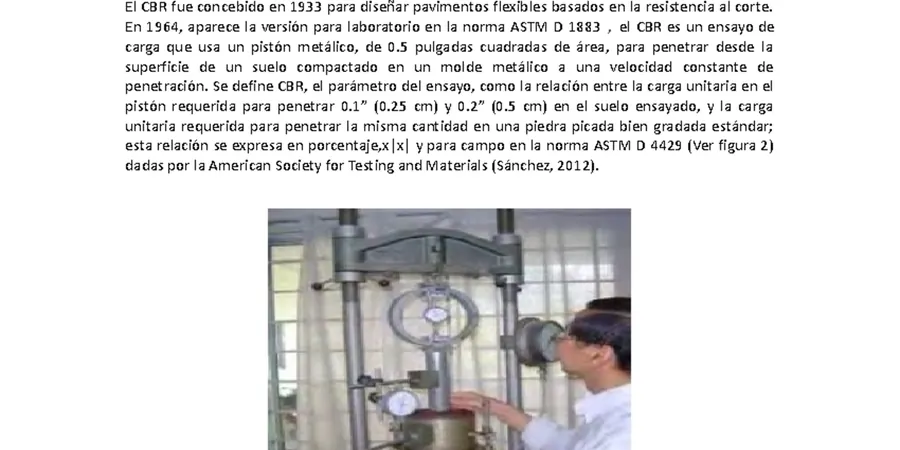
The core test for Ontario municipal pavement design. Includes 96-hour soaking, swell measurement, and load-penetration curves for both 0.1-inch and 0.2-inch penetration values.
CBR with Lime or Cement Stabilization
For Hamilton’s marginal silty clays, we prepare specimens with varying percentages of stabilizer, cure them under controlled humidity, and test CBR after the specified curing period to optimize the mix design.
CBR and Resilient Modulus Correlation
For MEPDG inputs, we run repeated load triaxial tests on companion specimens to develop a local Mr-CBR correlation for the Halton Till, improving the accuracy of mechanistic pavement analysis.
Expedited CBR for Construction Verification
When imported granular subbase arrives on site and the contractor needs confirmation of CBR before placing asphalt, we offer a 48-hour rush protocol with preliminary results by email.
Frequently asked questions
What does a laboratory CBR test cost in Hamilton?
A standard soaked CBR test on a single specimen typically ranges from CA$190 to CA$310, depending on whether compaction is included and how many points are required on the moisture-density curve. A full suite with three compaction points and three CBR specimens for a design curve is quoted based on the specific material and project scope.
How long does the lab CBR test take from sample drop-off to report?
The standard turnaround is five to seven working days. The majority of that time is the 96-hour soaking period mandated by ASTM D1883. Expedited service with a 48-hour soak and preliminary data is available for construction-phase verification, with the final report following within two days of test completion.
Can you test granular materials, or only fine-grained soils?
We test both. For granular base and subbase materials with a maximum particle size up to 19 mm, the standard 6-inch mold is used. Material with oversize particles larger than 19 mm requires a scalping procedure or a larger mold, and we discuss the appropriate correction method with the design engineer before testing.
What CBR value does the City of Hamilton require for residential streets?
The City of Hamilton typically requires a minimum soaked laboratory CBR of 3% to 5% for the prepared subgrade in residential subdivisions, depending on the street classification. If the native soil does not meet this threshold, the standard options are a thicker granular base course, subgrade stabilization with cement or lime, or full-depth replacement with select fill. The exact value is confirmed against the pavement structural design submitted with the site servicing drawings.