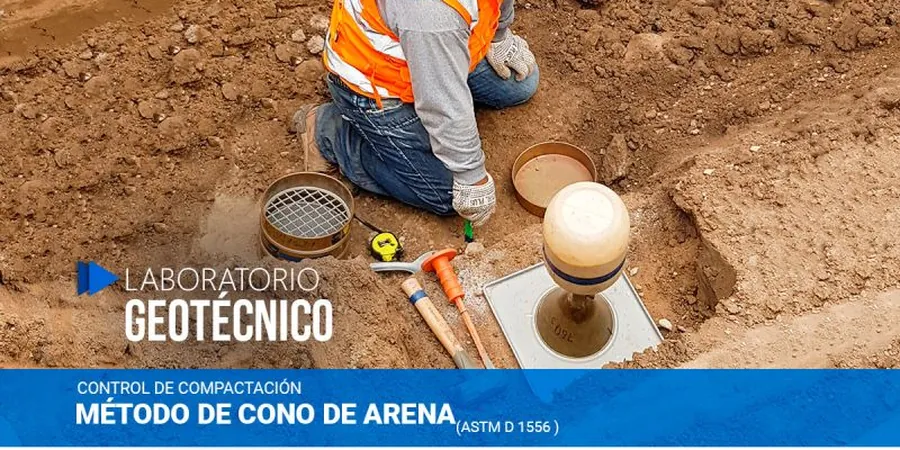
Around the industrial east end and across the Mountain, we see a lot of fill that looked fine during placement but settled unevenly after the first freeze-thaw. In Hamilton, the mix of glacial till and shale bedrock means compaction acceptance doesn't come from a smooth roll pattern alone—it comes from a nuclear-free field density test that the consultant actually trusts. The sand cone method remains the go-to reference standard when nuclear gauges aren't practical, or when a contractor needs an undisputable third-party check before signing off on a lift. We run these tests everywhere from rural watermain trenches in Flamborough to tightly scheduled high-rise parking decks downtown, pairing them with Proctor compaction curves so the site density number actually means something against the lab standard for that borrow source.
A passing sand cone test means the lift achieved target relative compaction—anything less is just a guess, and guessing costs money when settlement shows up later.
Methodology applied in Hamilton
Demonstration video
Typical technical challenges in Hamilton
Hamilton sits at roughly 75 metres elevation at the escarpment brow and drops to lake level at the harbour—that grade difference alone creates thousands of retaining structures and engineered fills where density shortfalls become slope stability problems. We have pulled sand cone results below 90 percent on backfill behind a new wing wall in lower Stoney Creek, where the trench had been backfilled quickly ahead of a rain forecast. The material was moist and the density showed it. You can't argue with a scale and a sand cone; the test either passes or it doesn't. If you skip it, the risk isn't a failed inspection next week—it's a pavement depression or a cracked utility bedding two winters from now, when the ground has cycled through enough frost to reveal every weak lift. That's why the Ontario Building Code references engineered fill acceptance, and why Hamilton inspectors expect a density report, not just a verbal assurance.
Our services
Our Hamilton density testing covers the full chain from lab proctor to field report, keeping your earthworks schedule moving.
Sand Cone Field Density
On-site compaction testing per ASTM D1556 for trench backfill, building pads, and road subgrade. Results delivered same-day with relative compaction calculated against your lab proctor.
Modified & Standard Proctor
Lab compaction curves (ASTM D1557 / D698) run on representative borrow samples to establish the target dry density before field testing begins.
Compaction Troubleshooting
When lifts fail, we help diagnose moisture issues, lift thickness problems, or equipment mismatches so corrective action is practical, not theoretical.
Frequently asked questions
How much does a sand cone density test cost in Hamilton?
Budget roughly CA$150 to CA$230 per test location, depending on site access, number of tests on the same visit, and whether a lab proctor is already on file. We can quote a fixed day rate if you have multiple lifts to check.
Is the sand cone method still accepted, or has it been replaced by nuclear gauges?
It is still widely accepted and often preferred in Hamilton as the reference method because it does not require a radioactive source license. Many municipal specs and geotechnical consultants specifically request sand cone tests for final acceptance of utility trench backfill.
What preparation do you need from the site before testing?
We need the compacted lift ready at grade, free of loose surface material. The excavator or compactor can keep working nearby, but we ask for about 20 minutes of undisturbed access per test hole. A smooth, level surface helps keep the base plate sealed against the ground.
How soon do we get the test results?
Field density and moisture numbers are calculated on-site, so you know within minutes whether the lift passes. The formal signed report with lab moisture content and relative compaction usually follows by email the same day or next morning.